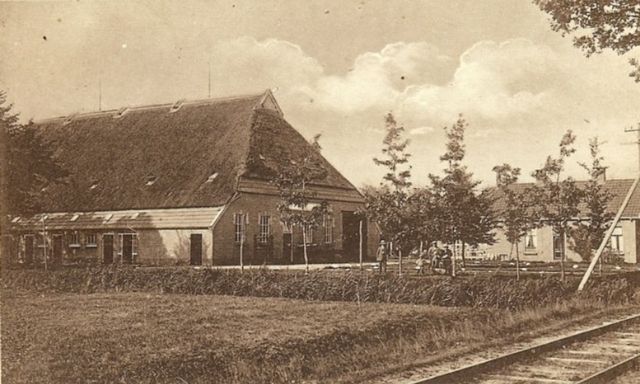
Koning Willem III farmstead
This barn was commissioned and designed by the Society of Weldadigheid in 1865. The farm has traditionally served as a model for the Society's scale-up policy and has always been a model function. The presence of modern milking robots and automatic feeding systems bear witness to this even today. The architecture is sober but neat and has some eclectic elements.
This colony farm was the Maatschappij van Weldadigheid's first project to make a financial return. Up to 60 wage-earning colonists worked there under the guidance of a professional farmer from the Society. In the 1950s-60s, the Society found that many settlers were unable to farm independently. By combining the land of 15-20 small homesteads, this large farm was created.
Also at this how...
This barn was commissioned and designed by the Society of Weldadigheid in 1865. The farm has traditionally served as a model for the Society's scale-up policy and has always been a model function. The presence of modern milking robots and automatic feeding systems bear witness to this even today. The architecture is sober but neat and has some eclectic elements.
This colony farm was the Maatschappij van Weldadigheid's first project to make a financial return. Up to 60 wage-earning colonists worked there under the guidance of a professional farmer from the Society. In the 1950s-60s, the Society found that many settlers were unable to farm independently. By combining the land of 15-20 small homesteads, this large farm was created.
This farmstead also originally had two hay sheds on either side of it. It is a national monument and is still in use. The current modern dairy farm leases the barn and land from the Maatschappij van Weldadigheid.