Telescopes Route LOFAR
1 hour 50 minutes
(9.1 km)
Just beforehand ...
Nice of you to join this walk!
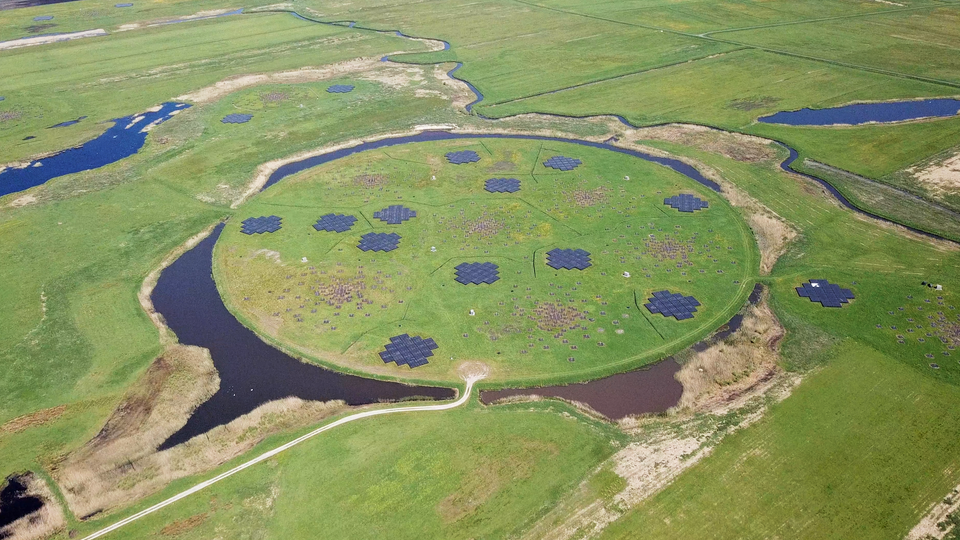
It is brought to you by ASTRON, the Dutch institute for radio astronomy. We investigate the most exciting questions about our universe with radio telescopes that push the boundaries of the technically possible. We have three radio telescopes: the Dwingeloo telescope on the Dwingelderveld, the Westerbork telescope in Hooghalen and the European LOFAR telescope with its heart in Exloo. We will tell you all about the latter telescope during this route!
Before Pietro welcomes you and takes you into the fascinating world of radio astronomy, a few 'housekeeping announcements':
- You walk the route at your own risk. Be careful where you walk or have to cross roads and stand in a safe place before reading a highlight.
- Keep time...
Just beforehand ...
Nice of you to join this walk!
It is brought to you by ASTRON, the Dutch institute for radio astronomy. We investigate the most exciting questions about our universe with radio telescopes that push the boundaries of the technically possible. We have three radio telescopes: the Dwingeloo telescope on the Dwingelderveld, the Westerbork telescope in Hooghalen and the European LOFAR telescope with its heart in Exloo. We will tell you all about the latter telescope during this route!
Before Pietro welcomes you and takes you into the fascinating world of radio astronomy, a few 'housekeeping announcements':
- You walk the route at your own risk. Be careful where you walk or have to cross roads and stand in a safe place before reading a highlight.
- During the walk, keep your phone and the route on; this will obviously help you see if you are walking in the right direction but will also notify you when a highlight is available.
- The route is not suitable for people with reduced mobility and/or a wheelchair or pram.
- With rainy weather, good walking shoes are recommended.
Are you well prepared? Then let's go...
Have fun!
You are going to see this
-
Highlight 1: Welcome!
Highlight 1: Welcome!
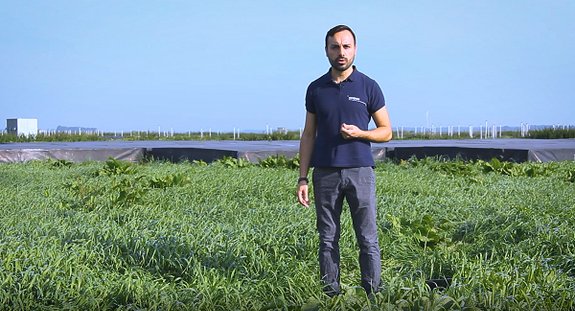
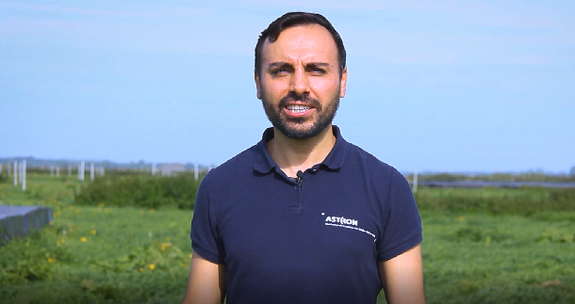
Benvenuto! Welcome, I mean! My name is Pietro and I am a scientist at ASTRON. Oh, that's the Dutch institute for radio astronomy. I have been working at ASTRON on LOFAR for several years. Hi...
-
Highlight 2: Research universe
Highlight 2: Research universe
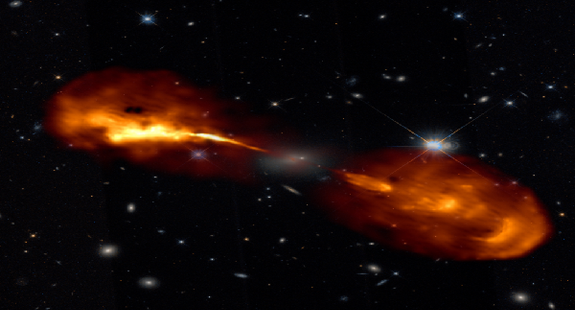
Exploring spaceIf you've already been to ASTRON headquarters in Dwingeloo, you already know a thing or two about how astronomers look at the universe. We look...
-
Highlight 3: Low frequencies
Highlight 3: Low frequencies
What is so interesting about these low frequencies? You should know that most radio telescopes on Earth measure relatively high frequencies, i.e. signals with a fairly short...
-
Highlight 4: What is LOFAR?
Highlight 4: What is LOFAR?
I can already hear you thinking: what is that man always babbling about. LOFAR? Well, LOFAR stands for LOw Frequency ARray. Low Frequency indicates that this is a radio telescope that generates low-frequency radio waves and...
-
Highlight 5: Sensitive aerials
Highlight 5: Sensitive aerials
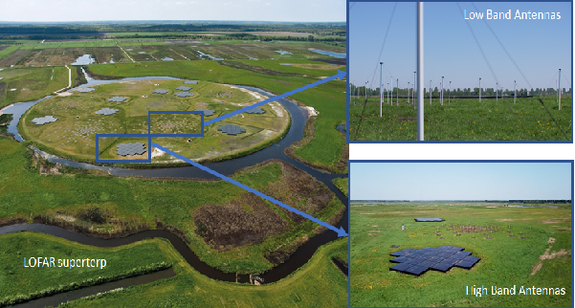
The best way to increase sensitivity is to add more antennas. After all, the more measuring instruments, the more received data you can compare and evaluate so that you can also get very...
-
Highlight 6: Beamforming
Highlight 6: Beamforming
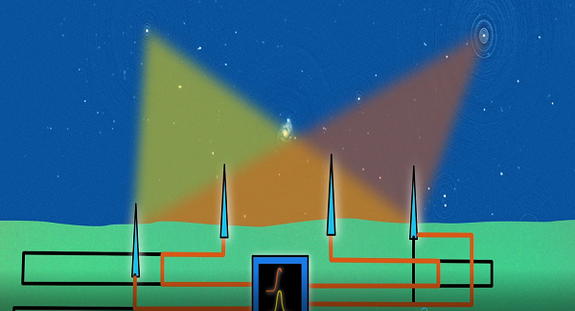
I just explained that a huge number of antennas are used. And all those antennas catch non-stop signals from all sides. This mainly generates a lot of noise. So how do you make sure...
-
Highlight 7: Innovation
Highlight 7: Innovation
So many antennas simultaneously picking up extremely weak signals from the beginning of time from space. Of course, that is a sensitive job! And also very susceptible to interference from other...
-
Highlight 8: European network
Highlight 8: European network
We may be in Drenthe now, but LOFAR stations have been built all over Europe! One in Ireland and another in England, west of here. There is one in Sweden. As many as six in Germany! Three in...
-
Highlight 9: In the landscape
Highlight 9: In the landscape
Het Drentse LandschapToday it's my pleasure to show you around, but normally interested people can get a tour of this area from the free...
-
Highlight 10: Collecting data
Highlight 10: Collecting data
A lot of dataAll those antennas with all those signals.... An awful lot of data comes in via LOFAR. As much as 228 Gigabits of data... per SECOND! That's a row of tablets of 4 k...

-
Highlight 11: Team
Highlight 11: Team
But in the end, of course, this huge stream of data has to be examined if we want to learn anything from it. That's why I like to tell a bit about the people working with and on LOFAR.

-
Highlight 12: Use telescope
Highlight 12: Use telescope
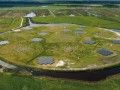
Do you know that you are now in the heart of the LOFAR telescope? Across the road is LOFAR's so-called superterp.Research proposalIn the k...
-
Highlight 13: What does it deliver?
Highlight 13: What does it deliver?
You might wonder: but what are all those hundreds of researchers working on? LOFAR is definitely a technical tour de force, but what does it give us? I'm happy to tell you...
-
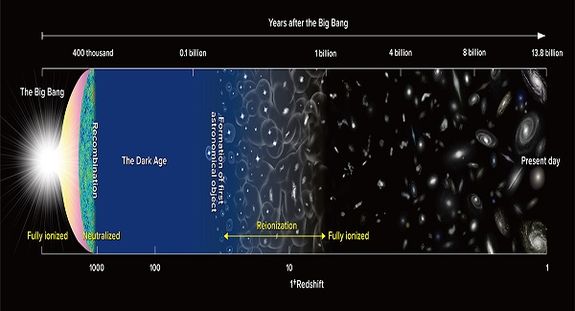
Highlight 14: Epoch of Reionization
Highlight 14: Epoch of Reionization
When did the light in our universe turn on?When the universe was still young, some 370,000 years after the Big Bang, positively charged particles (protons) and negatively charged...
-
Highlight 15: Extragalactic surveys
Highlight 15: Extragalactic surveys
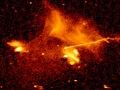
Formation and evolution of galaxiesLOFAR combines an amazing measurement speed (compared to existing radio telescopes) with the ability to observe those parts of the radio galaxy...
-
Highlight 16: Pulsars
Highlight 16: Pulsars
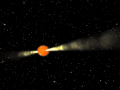
707 times per secondPulsars are the smallest stars in existence. Many are only 20 km across, but at the same time they weigh 3 times as much as our sun. They ont...
-
Highlight 17: SKA
Highlight 17: SKA
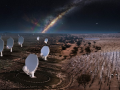
Southern hemisphereIn addition to the LOFAR megaproject, ASTRON is also collaborating on the SKA radio telescope, which works in a similar way. These telescopes will be located in the desert...
-
Highlight 18: LOFAR 2.0
Highlight 18: LOFAR 2.0
Stable imageUnder ASTRON's leadership, the LOFAR 2.0 upgrade is being rolled out. This should ensure that LOFAR remains the most powerful very-low-frequency instrument, in any...

-
Highlight 19: The future
Highlight 19: The future
By giving LOFAR an upgrade, our scientists will surely produce even more impressive results. These include discoveries in the field of galaxy research,...
-
Highlight 20: We are almost there!
Highlight 20: We are almost there!
Che peccato - we have already reached the end of our route! Ah, I could spend hours telling you about our wonderful LOFAR, but I can also imagine that by now your ears are ringing....