Walking route from Van Brink to the heathland
(3 km)
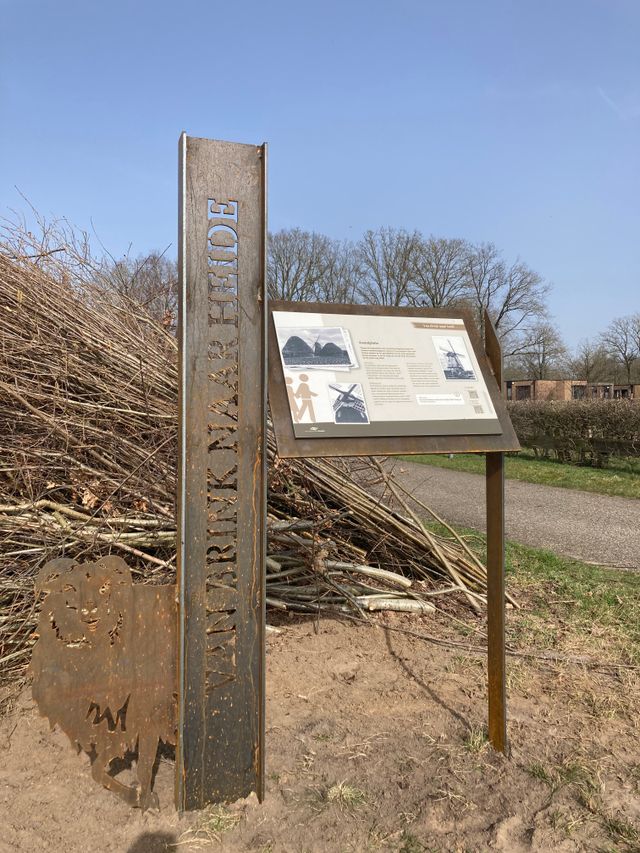
Set off from the charming village of Ruinen into the countryside and let yourself be guided along the ‘From Brink to the heath’ walking route . The route starts at De Kaamp and leads you, step by step, towards the vast Dwingelderveld.
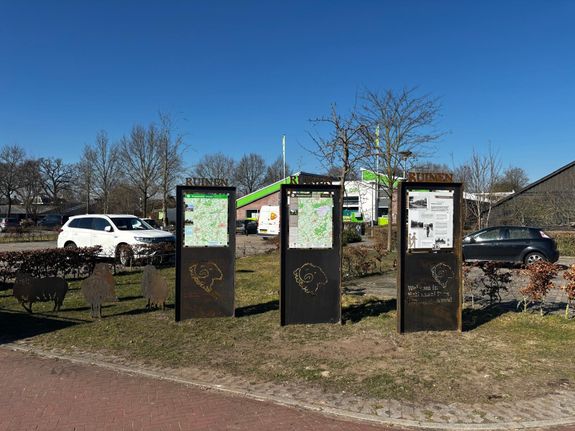
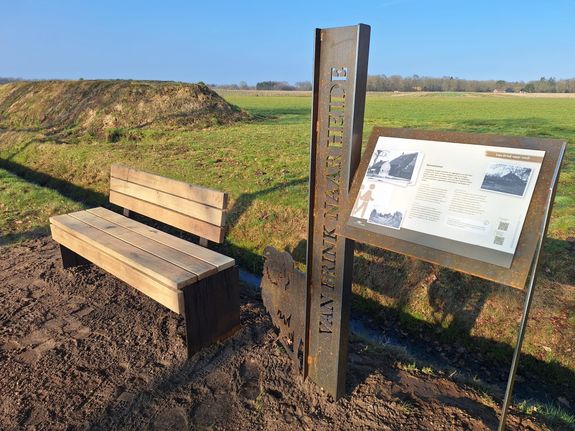
Along the way, you’ll come across benches where you can take a break and information panels that bring the stories of the landscape to life. Discover how the windmill used to keep the village running, how sheep shaped the heathland and how agriculture and recreation have changed the area over the years.
As you walk, you’ll learn to interpret the landscape. Every stretch of the path tells a story about both the past and the present of this special place. This makes a walk not only relaxing, but also a journey of discovery.
Let yourself be surprised by the…
Set off from the charming village of Ruinen into the countryside and let yourself be guided along the ‘From Brink to the heath’ walking route . The route starts at De Kaamp and leads you, step by step, towards the vast Dwingelderveld.
Along the way, you’ll come across benches where you can take a break and information panels that bring the stories of the landscape to life. Discover how the windmill used to keep the village running, how sheep shaped the heathland and how agriculture and recreation have changed the area over the years.
As you walk, you’ll learn to interpret the landscape. Every stretch of the path tells a story about both the past and the present of this special place. This makes a walk not only relaxing, but also a journey of discovery.
Let yourself be surprised by the tranquillity, the open spaces and the stories along the route — and experience how the village gradually gives way to the heathland of the Dwingelderveld.
Parking
You can park at De Kaamp; there is plenty of parking here to leave your car and set off on your walk. You will also find the first information panel at De Kaamp.
Signposting
This walking route is signposted. It is also possible to join the route at other locations by following the signposts.
Food & drink
There are several lovely spots on De Kaamp and at De Brink in Ruinen that will round off your visit.
You are going to see this
-
Ruinen – A rich history
Ruinen – A rich history
Ruinen is one of the oldest villages in Drenthe, with roots dating back to the early Middle Ages. Over 1,200 years ago, the first farmers settled on these higher sandy soils. They made the rugged landscape habitable by clearing forests to create farmland.
-
Bram de Ram
Bram de Ram
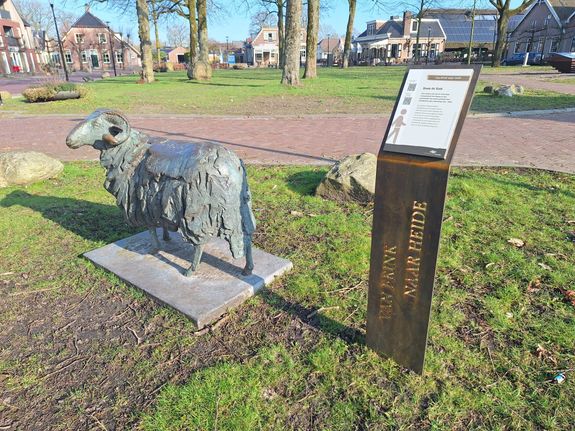
This bronze ram, named Bram, is a symbol of Ruinen and its history. The sculpture was created by the sculptor Johan Sterenberg (1920–2002).
-
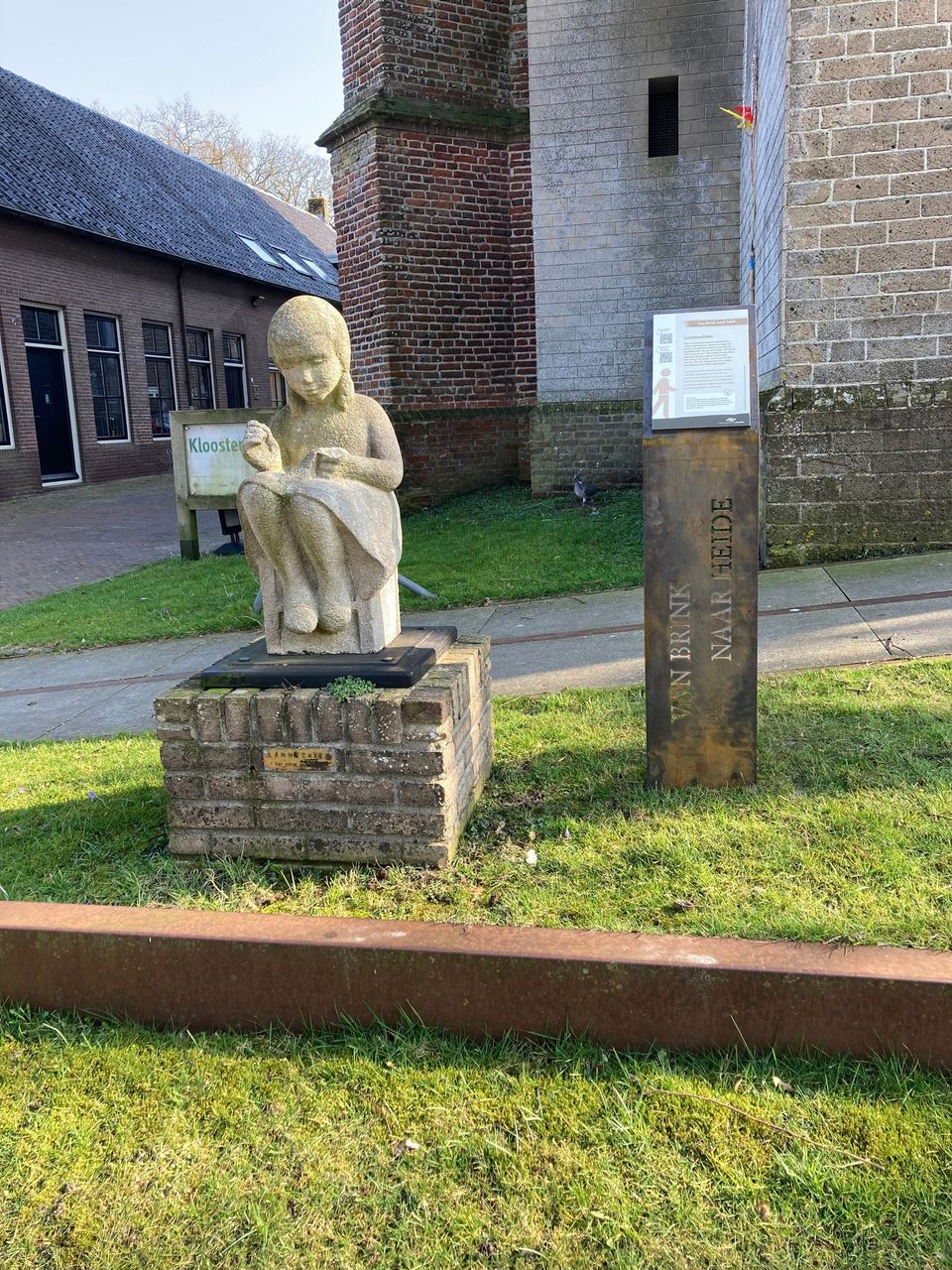
Lammechien
Lammechien
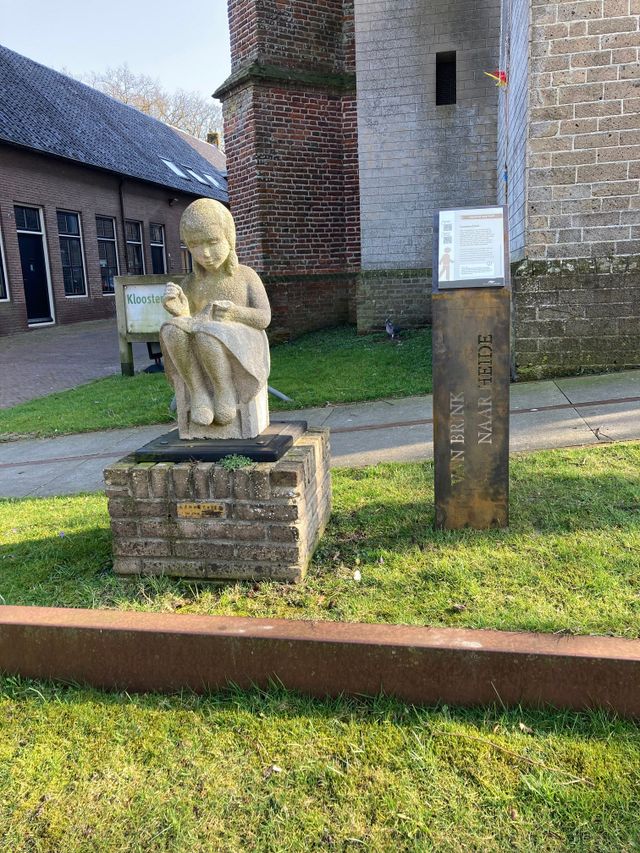
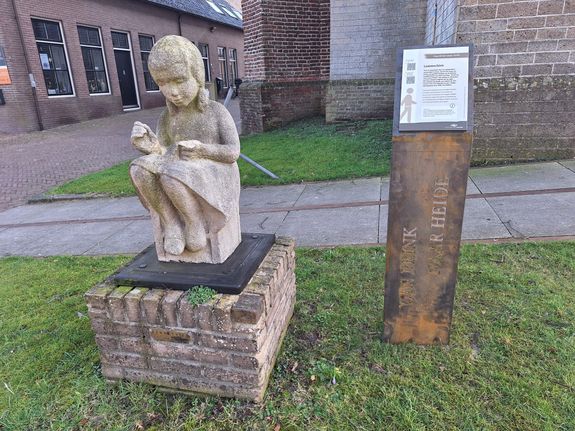
In front of the Mariakerk, we see Lammechien, immortalised in stone. She was the little sister of Bartje, a much-loved character from Anne de Vries’s Drenthe children’s literature: ‘Ik bid nie veur brune bonen.’ The girl is linked to the region’s cultural heritage.
-
Faraway places
Faraway places
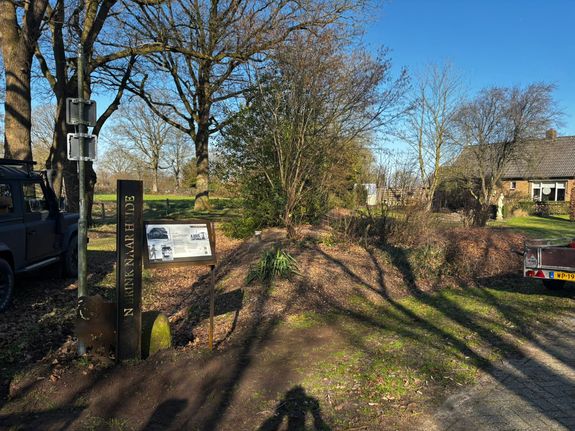
Anyone walking here might feel for a moment as though they’re abroad. Although you’re not actually walking to England or Lisbon, you are travelling through a landscape steeped in history.
-
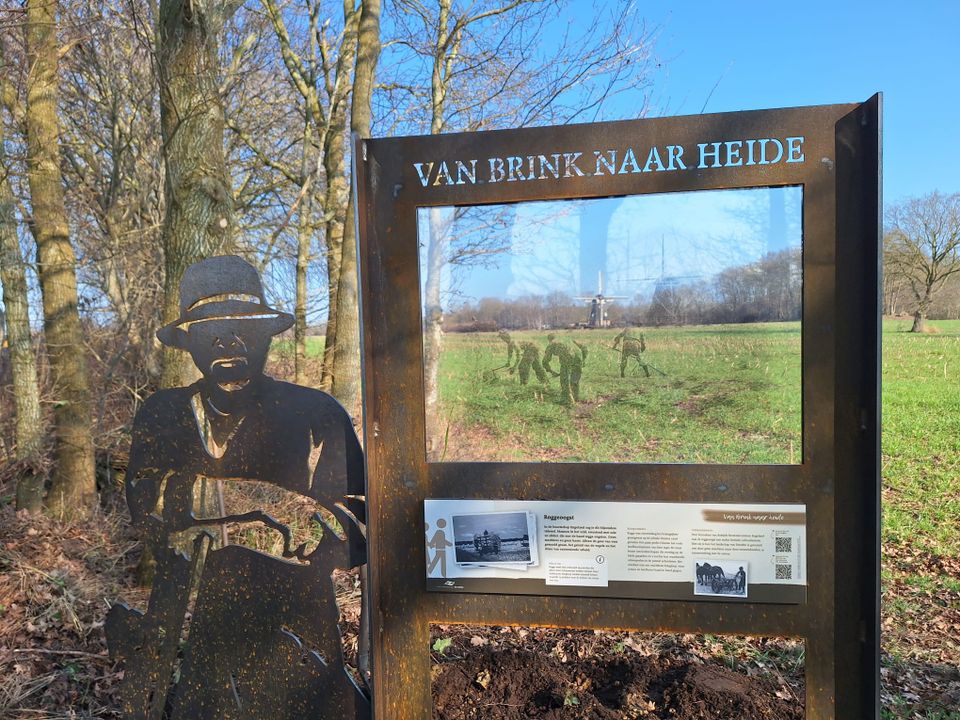
Rye harvest
Rye harvest
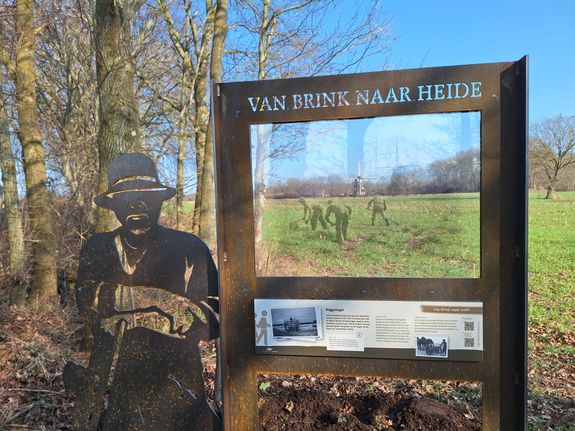
In the hamlet of Engeland, you could witness this remarkable scene. Men in the field, wielding scythes and sickles, harvesting rye by hand. No machines and no rush. Just the scent of freshly cut grain, the sound of birds and the rhythm of age-old labour.
-
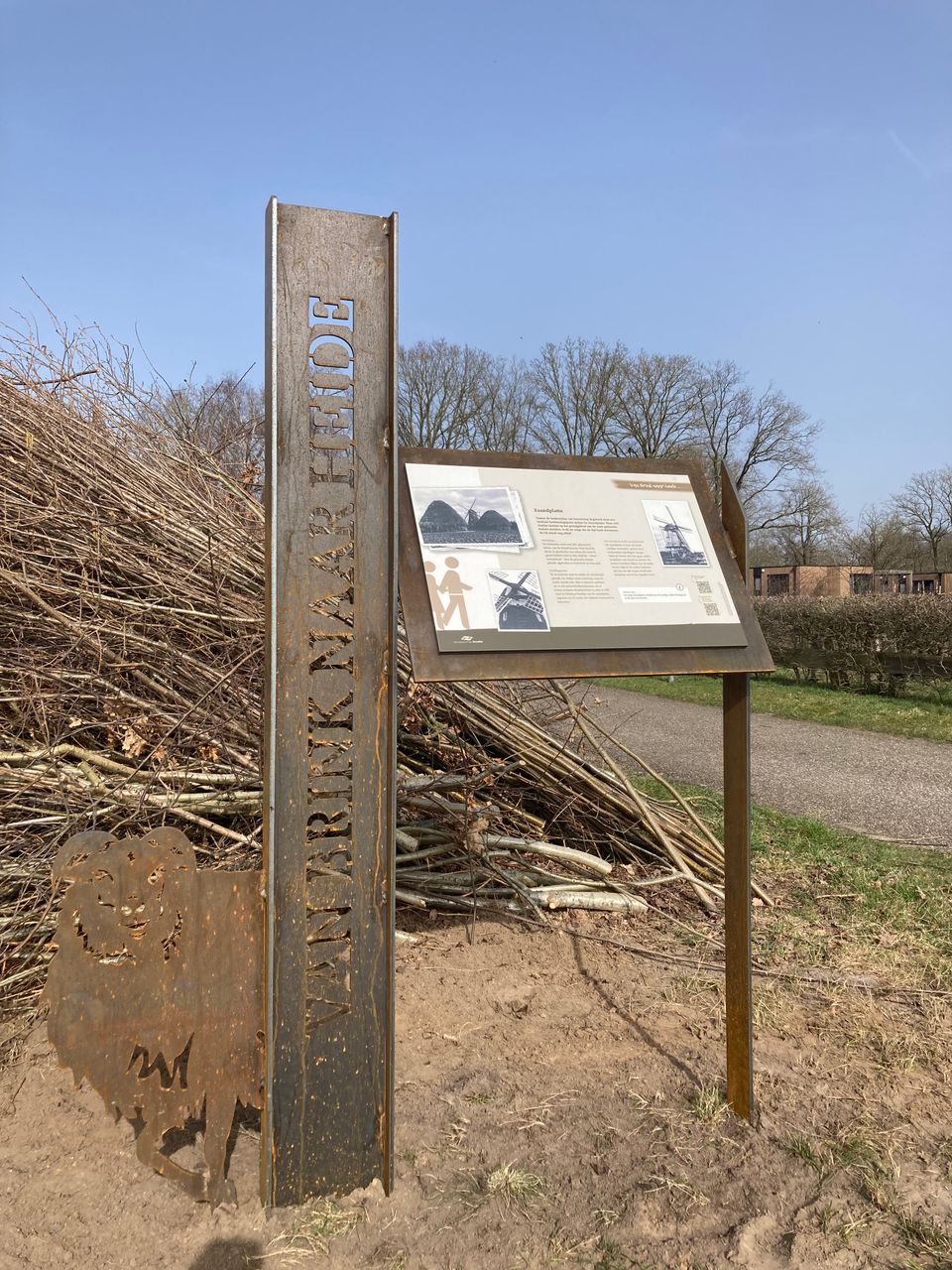
Zaandplatte
Zaandplatte
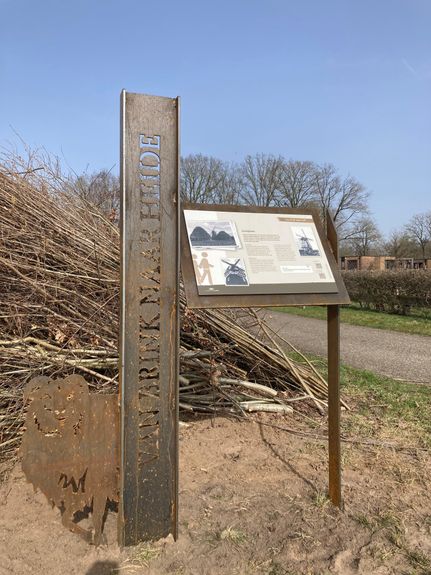
Amidst the heathland of the hamlet of Engeland stands a striking landmark: De Zaandplatte windmill. Of the thirteen windmills that once stood within the boundaries of the former municipality of Ruinen, this is the only one to have stood the test of time. And it’s still turning!
-
Shepherds and sheep
Shepherds and sheep
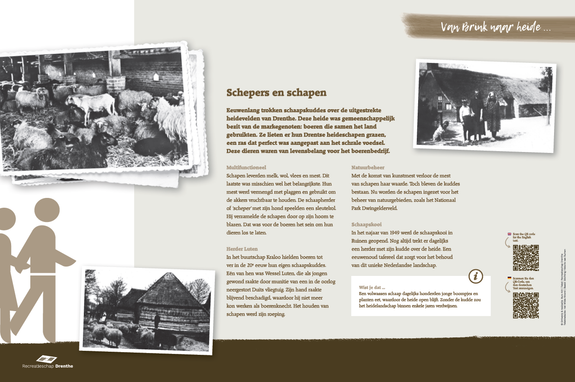
For centuries, flocks of sheep roamed the vast heathlands of Drenthe. This heathland was communally owned by the ‘markegenoten’: farmers who used the land collectively. They let their Drenthe heath sheep graze there, a breed perfectly adapted to the sparse vegetation.
-
Country life
Country life
For centuries, agriculture formed the backbone of life in Ruinen. The first farmers settled on the higher-lying eshes where their fields were located. Along the stream valleys lay hay meadows and pastures, but the land consisted mainly of uncultivated terrain: vast heathlands, marshes and forests.
-
A popular holiday destination
A popular holiday destination
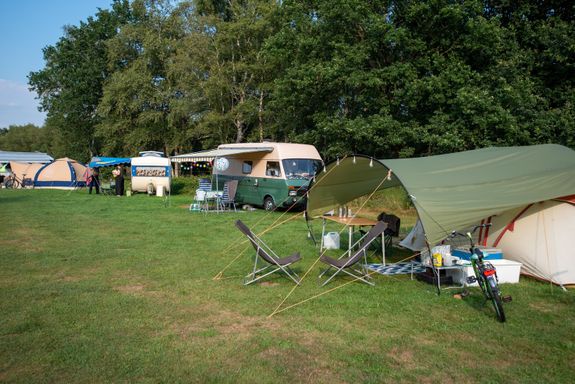
As early as 1928, Ruinen was praised as a holiday destination. In the booklet ‘To Drenthe, a holiday resort par excellence’, the landscape was praised for its ‘unspoilt natural beauty’. Here, you could walk and cycle to your heart’s content along quiet forest paths and across vast heathlands.
-
National Park Dwingelderveld
National Park Dwingelderveld
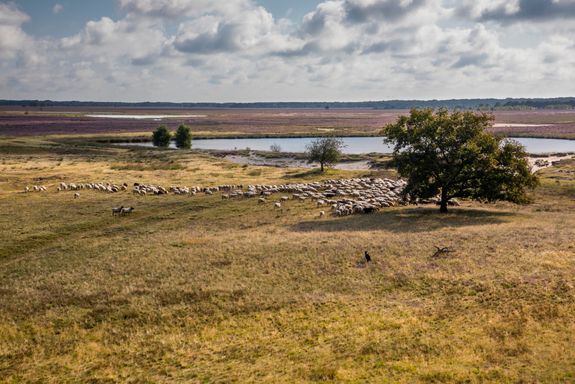
An attraction for everyone who loves nature: National Park Dwingelderveld in south-west Drenthe! The largest quiet wet heathland in Western Europe, the Dwingelderveld wo...
-
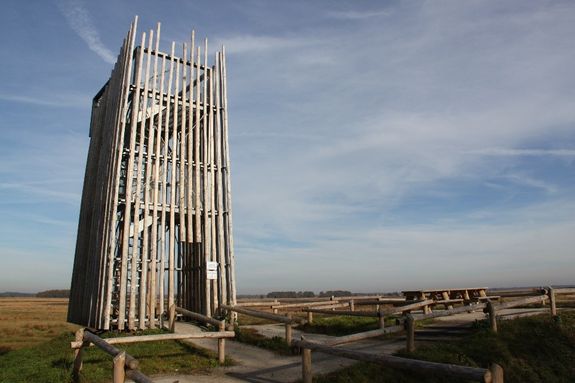
View tower Ruiner sheepfold
View tower Ruiner sheepfold
An embankment allows interested visitors to reach the viewing hill, which is three metres above ground level. The viewing hill is also accessible for wheelchair users, buggies, prams and other ve...