


Diever Ommetje Romeo and Juliet
1 hour 30 minutes
(7.5 km)
The start of Romeo and Juliet is on Diever's Brink at walking junction 45. Diever is an esdorp, and the route is 7.5 km. During this Ommetje, you pass ash trees and through the hamlet of Oldendiever.
Combination Ommetjes: You can link Ommetjes together. The Ommetjes start on the Brink, with the exception of Ommetje King Lear. This starts at Landgoed 't Wildryck or Landhotel Diever.
Parking, public transport and cycling. Parking is available next to the former Town Hall (Kerkpad 1), in the car park near Supermarket Plus or in the car park opposite the TIP/Brasserie Puur on Bosweg.
Bus lines 20 (to Steenwijk) and 28 (to Meppel/Assen) stop at the stops in Diever. Bicycles and E-bikes can be placed on the Brink. E-bikes can also be charged here.
Signposting: follow the moss-green signs with the name Romeo and Juliet. The route is single-sided signposted.
Dogs: allowed, if leashed.
K...
The start of Romeo and Juliet is on Diever's Brink at walking junction 45. Diever is an esdorp, and the route is 7.5 km. During this Ommetje, you pass ash trees and through the hamlet of Oldendiever.
Combination Ommetjes: You can link Ommetjes together. The Ommetjes start on the Brink, with the exception of Ommetje King Lear. This starts at Landgoed 't Wildryck or Landhotel Diever.
Parking, public transport and cycling. Parking is available next to the former Town Hall (Kerkpad 1), in the car park near Supermarket Plus or in the car park opposite the TIP/Brasserie Puur on Bosweg.
Bus lines 20 (to Steenwijk) and 28 (to Meppel/Assen) stop at the stops in Diever. Bicycles and E-bikes can be placed on the Brink. E-bikes can also be charged here.
Signposting: follow the moss-green signs with the name Romeo and Juliet. The route is single-sided signposted.
Dogs: allowed, if leashed.
Prams/ wheelchairs: this route goes partly on unpaved and narrow paths. Therefore not suitable for prams and wheelchairs.
Catering facilities: on the Brink and in the village.
-
route sign

route sign

You are going to see this
-
45
-
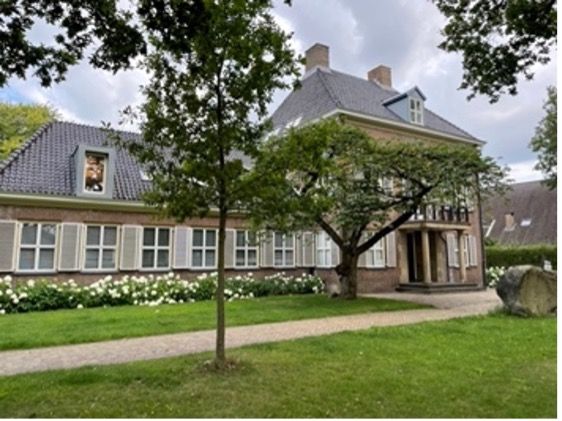
Former Diever town hall
Former Diever town hall
Former town hall. Built on behalf of the municipality of Diever, designed by the Drenthe architect J. Boelens (Assen).
-
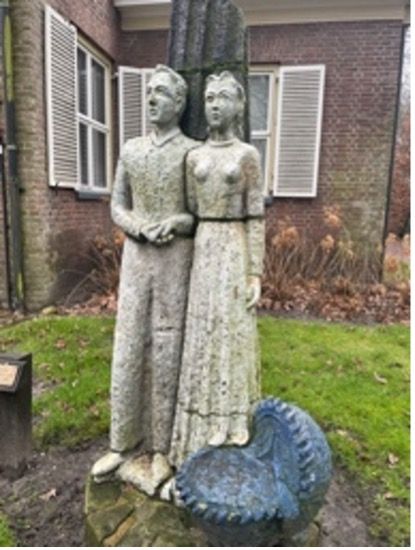
Image Life
Image Life
Stone statue of a man, a woman (marriage) and a baby in its cradle (birth) standing in front of a broken column (death). It stands in front of the former Diever town hall, where birth, marriage and death were declared.
-
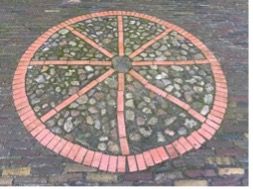
Pavement the Wheel of Life
Pavement the Wheel of Life
Paving Abe Brouwer in front of the old town hall. Abe Brouwer was a paver and writer; he was also involved in the Shakespeare Theatre. This wheel of life symbolises the different stages of life. Abe's paving can be found in several places in the village.
-
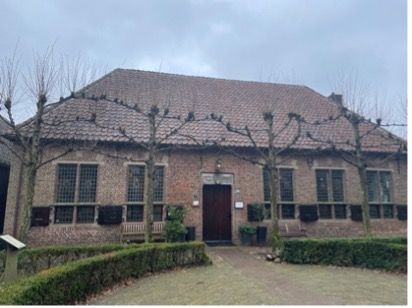
National monument, Primeval Museum
National monument, Primeval Museum
National Monument, Primeval Museum. Voorml. Schultehuus. Building was built in 1604 by order of the schulte Berend Ketel. The schulte was a notary/mayor who also had judicial duties.
-
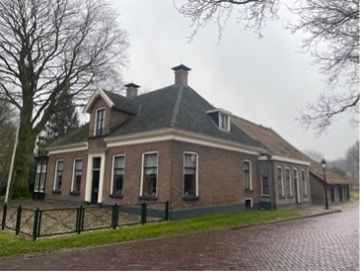
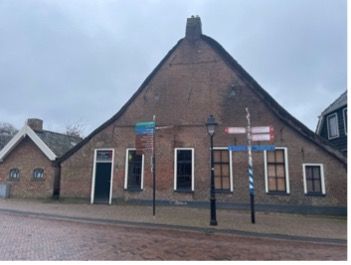
Monumental farmhouse, Brink 11
Monumental farmhouse, Brink 11
National monument: farmhouse (Brink 11) of the halle house type with a transverse house in front. The boiler house with potting shed at this farm is also listed.
-
49
-
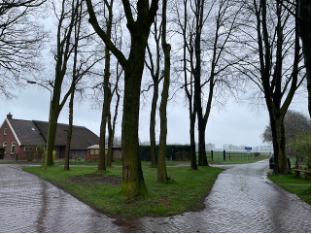
Brinkie
Brinkie
At the junction between the farms, you can see a stretch of grassy field. This is also known as the Brinkie of Oldendiever.
-
32
-
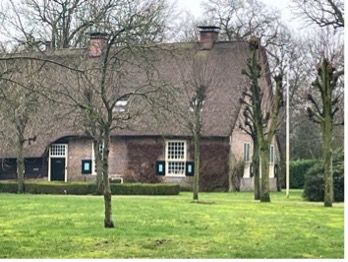
National monument, Holtenweg 2
National monument, Holtenweg 2
National monument, Holtenweg 2 Voorml. residence of Hans Wiegel (VVD politician). He was also called " the Oracle of Diever". The farmhouse dates from the 17th century but was largely destroyed by a fierce fire in 1981. The property was rebuilt again.
-
40
-
16
-
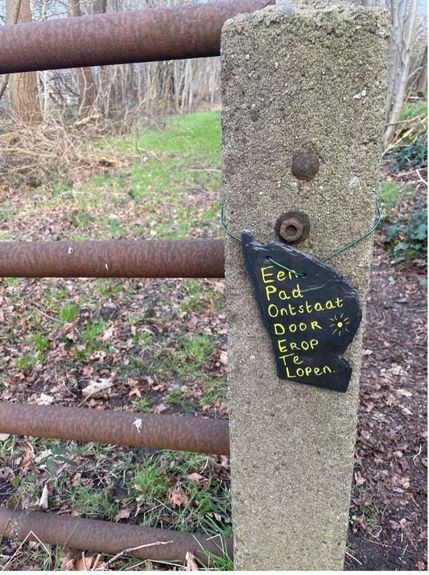
One-man trail with church slates
One-man trail with church slates
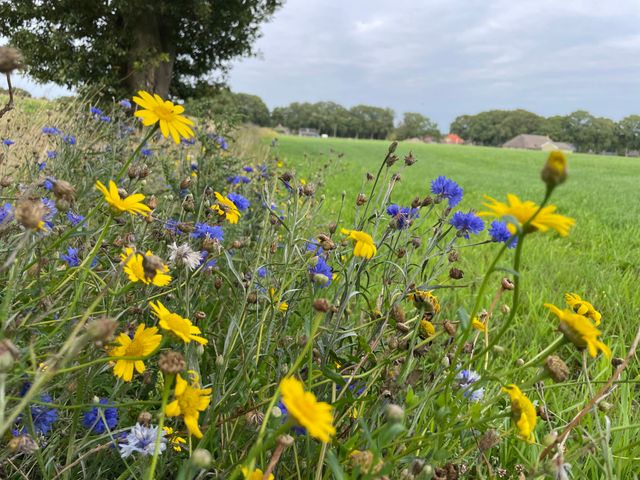
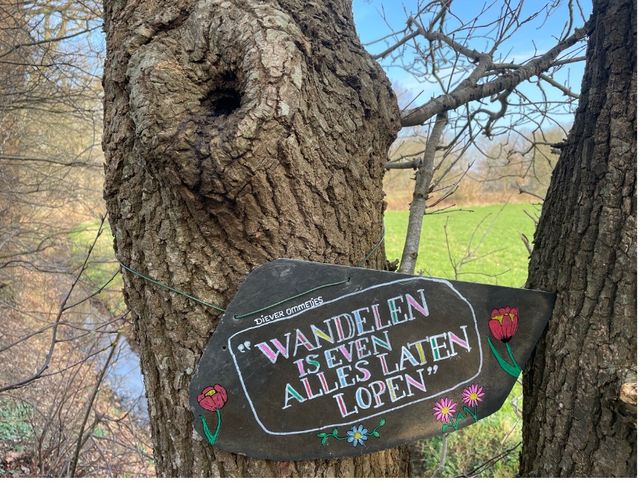
One-man trail along fields and farmlands. Here you can see painted church slates with walking texts and drawings referring to Shakespeare.
-
20
-
National monument Kruisstraat 2
National monument Kruisstraat 2
National monument Kruisstraat 2, now a dental practice and residences.
-
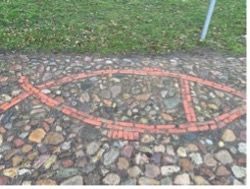
Boulder paving with ancient Chr. symbols
Boulder paving with ancient Chr. symbols
Boulder paving with ancient Chr. symbols, around the Pancratius church. Layed by Abe Brouwer.
-
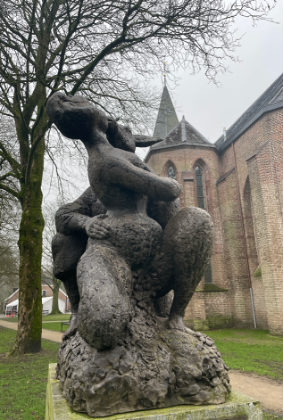
Bronze sculpture Spoel de Wever
Bronze sculpture Spoel de Wever
Bronze statue of Titania and Spool the Weaver from a scene in William Shakespeare's play Midsummer Night's Dream. Arie Teeuwisse created the sculpture in 1971.
Description
- The start is on the Brink in Diever at walking junction 45. From the Brink, walk in front of the old Town Hall and follow the Brinkstraat to Oldendiever. On the way, you pass mill de Vlijt.
- Oldendiever. Via the Brinkie of Oldendiever, you walk up the dirt track along the Westeres. Diever is an ash tree village and has several ash trees. The path takes you to the Westerdrift. There you turn left and reach Oldendiever.
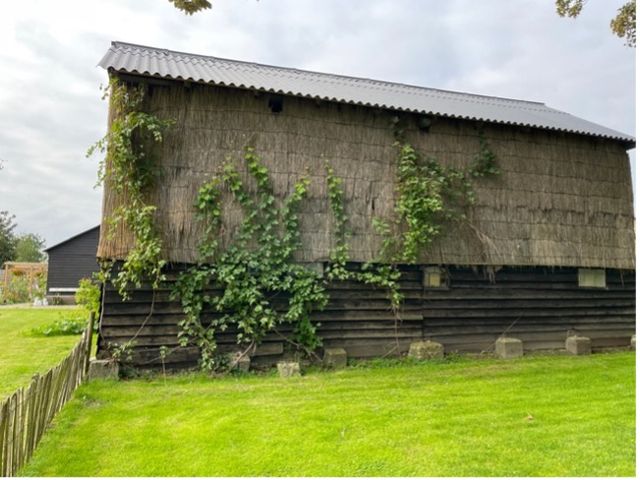
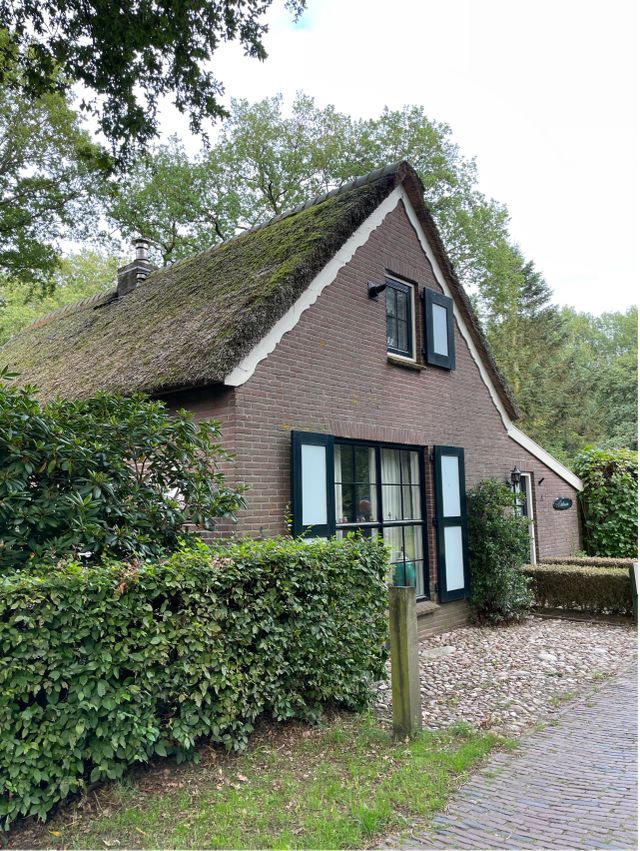
- Farms. via cobbled roads, you walk through Oldendiever with its beautiful old farms with pothouses and along the Zuurlanderes. Outside the village, you follow a path along the ditch and cross to Oostenkampenweg in Dieverburg.
- One-man trail. Follow a surprising one-man trail. Painted slates with fun (hiking) texts hang here, and this path takes you back to the village. You walk via the Castle and Van Os street to the JT Seinenhof. And then it's just a short walk back to the Brink.
- 45
- 49
- 32
- 40
- 16
- 20